 |
 |
Can't view this email? Visit the newsletter in your browser.
|
| "A world where equity is at the root of a dynamic harmony between peoples and nature, as well as among peoples..." |


 |
||||||
|
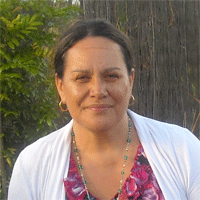
Comments from the Chair: Aroha Te Pareake Mead
Sharing Power Conference was a first for CEESP in many ways. It was the first time the Commission held a global Conference. The first time IUCN and CEESP partnered with indigenous organisations (Te Runanga o Ngati Awa and Te Whare Wananga o Awanuiarangi) in a meaningful and comprehensive way. The first time CEESP had worked with the other IUCN Commissions, the President, Director General and Secretariat including the IUCN Oceania Regional Office in a way consistent with the new ‘One Programme' approach. Most importantly, it was the first time, CEESP reached out to a broader network in such a systematic way to share information, insights and solutions on issues of deep concern to CEESP and to progress thinking on a new conservation ethic and a a new vision for development There were many lessons learned during the Conference that will be progressed by CEESP in the coming years. The Sharing Power Conference also held special significance for me as it was a great honour to be able to host this event and welcome participants to my beloved tribal (Ngati Awa) homelands in Whakatane. |
||||||
 |
||||||
 |
||||||
|
|
||||||
|
Sharing Power Conference: SUMMARY The Sharing Power Conference was held in Whakatane, New Zealand, 11-15 January, co-sponsored by the International Union for Conservation of Nature (IUCN) Commission on Environmental, Economic, and Social Policy (CEESP) and two Mäori (indigenous) organizations, Te Rūnanga o Ngāti Awa (a tribal authority) and Te Whare Wänanga o Awanuiärangi (a tribal university). As described on the Conference website, http://www.sharingpower.org: "The Conference brought together scientists, economists, indigenous leaders, environmentalists, academics, policy makers in national governments and international agencies, and many others who care about the quality of heritage this generation passes on to future generations. The Conference also focused on the need for policy and decision makers in Governments and Corporations to accommodate a greater level of inclusion of indigenous peoples and all citizens, in national and international policies on the management and governance of bio-cultural resources, and advocated the rights of mother earth – the planet." International Union for the Conservation of Nature to review and advance implementation of the ‘new conservation paradigm', focusing on rights of indigenous peoples. Indigenous peoples' representatives met with Chairs of Commissions of the International Union for the Conservation of Nature (IUCN) and other conservation organizations, for a high-level dialogue during the Sharing Power conference, in Whakatane, New Zealand, on January 13th, 2011. IUCN agreed to review the implementation of resolutions related to indigenous peoples taken at the 4th World Conservation Congress (WCC4) in 2008, in Barcelona, Spain, and to advance their implementation. Working together to advance IUCN work on indigenous peoples' issues In Whakatane, a meeting held between IUCN Member Forest Peoples Programme, senior IUCN staff, Commission Chairs and other Members initiated a process to review the status of IUCN Secretariat and Commission work on indigenous peoples (IP) to explore opportunities to strengthen our approach to indigenous issues, expand our network and feed in to our intersessional programme for 2013-2016. Discussion over activities is still underway but they include submitting a report on policies, activities and opportunities to IUCN Council, an update for the UN Permanent Forum on Indigenous Issues, and exploring ways to address protected areas and IP issues at national levels. Kaia Boe, IUCN Secretariat. |
||||||
|
|
||||||
| |
||||||
|
IMAGES | SHARING POWER CONFERENCE
|
||||||
| |
||||||
| |
||||||
|
|
||||||
| |
||||||
| |
||||||
|
CEESP Steering Committee Updates CEESP announces new SC members We are pleased to introduce to you and welcome two new members of the CEESP Steering Committee. We welcome Jennifer Mohamed-Katerere, Co-Chair, Theme on Environment, Conflict and Security and Mohammad Shahbaz, CEESP Regional Vice-Chair, West Asia. A new and exciting development for CEESP is the new position of CEESP Network Officer based at the IUCN HQ in Gland Switzerland, Georgina Peard. CEESP Steering Committee Meeting, Whakatane NZ
Opportunity to join new TILCEPA Groups
The TILCEPA Mountain Social Policy Specialist Group has as its mandate to study and promote effective participation of local communities and indigenous peoples in mountain conserved areas, with a focus on mountain connectivity landscapes and transboundary mountainous Protected Areas.
New TGER Case Registry project The Theme on Governance, Equity and Rights is setting up a webpage that includes a public registry of cases of good practice and bad practice of conservation attention to governance, equity and rights. Everyone is invited to contribute cases, using a standardized form and criteria to be included on the website. In conjunction with the CBD COP-10, a multi-lingual three day workshop on ICCAs was held at the Shirakawa-Go Eco Institute (Japan) from 28-30 October 2010. The workshop consisted of fifty-five participants, who ranged from: indigenous peoples and local communities, to NGOs and agencies working with them; members or affiliates of the ICCA Consortium; governments; cooperation agencies and international organisations.
Despite their varied backgrounds, each attended the workshop in order to address their concern for the appropriate recognition and support to ICCAs.
The purpose of the workshop was to provide a focused opportunity for assessing the current state of ICCAs as well as relevant initiatives and resources that could build collective capacity for securing ICCAs' future. REDD and Communities Task Force plans for 2011 The CEESP REDD and Communities Task Force has launched its plans for 2011 this month. The task force, which is formally incorporated under TGER, will continue to disseminate regular information on the development of national and international policies to Reduce Emissions from Deforestation and forest Degradation and enhance carbon stocks (REDD+). Theme on Environment, Conflict and SecurityTECS Consultations | The Theme on Environment, Conflict and Security focuses on the intersection between environmental governance, environmental change and conflict and how this impacts on multiple... |
||||||
| |
||||||
| |
||||||
|
Updates | Reports | Publications Marine conservation biologist honored by Alaska Legislature The legislative citation, authored by Rep.. Berta Gardner, D-Anchorage, and signed by 30 Republicans and Democrats in the State House, cites Steiner's nearly 30 year career with the university as well as his global conservation work, and publications that have reached millions of readers. The United Nations Special Rapporteur on the Rights of Indigenous Peoples, Mr. James Anaya, is currently carrying out a study on the rights of indigenous peoples in relation to natural resource extraction and development projects affecting them. I agree that extractive industry affects us all, but there is disproportionate threats experienced by indigenous peoples around the world.
Links to this document are availble in English, Spanish and French.
For two issues (CEESP September 2010 and December 2010), we have raised attention to how an international network of environmental organizations and the forest industry have been shaping forest policy in the Canadian boreal region. We specifically focused on the Far North Act in Ontario and the Canadian Boreal Forest Agreement, both of which were signed in 2010 . The Far North Act committed 50% of Ontario's Far North region to protection through a process of both regional planning and community-based land use planning. Linking and Geotagging Pastoralist and Mobile Production Systems
For many traditional populations devoted to such livelihoods, mobility is still perceived as a prerequisite for conserving agrobiodiversity and animals breeds. On the other hand, governments, as well as some conservation organizations alike, tend to associate mobility with uncertainty, poverty, lack of technical skill and, overall, with a precarious life-style: “an endlessly roaming around in search of food” Authored by Dr. Dan Robinson of the University of New South Wales and Kabir Bavikatte | This article is to be published in the open access peer reviewed journal- Law, Environment and Development Journal (LEAD journal). All articles in the LEAD journal are open access.
This means going beyond a focus on protecting farmers' rights to benefit-sharing, to include protection of farmers' customary rights over genetic resources and associated landscapes, cultural and spiritual values and customary laws, on which the continued conservation and improvement of PGRs by farmers depends. The Treaty recognises the enormous contribution that indigenous and local communities and farmers have made to the conservation and development of PGRs (article 9.1). The Wetland Carbon Partnership continues for a 3rd Year
Danone is using these credits to green its Evian label and in so doing linking this brand to responsible action to mitigate climate change, conserve biodiversity and support local livelihoods. To date, Danone has financed two pilot programmes. World Heritage, Local Communities and Human Rights
En las últimas horas de la Convención, se logró la firma de un Protocolo Internacional para que las Partes, Compartan los Beneficios de los recursos genéticos del Planeta. Scientists' Consensus Statement on Protection of the Ross Sea
Please reply to Claire Christian with your name, affiliation, discipline, degree or other qualification and country to add your name to the signatories. Please also forward this message to colleagues and ask them to reply to Claire Christian directly. Signatories should have a Masters, PhD or equivalent. So far 464 scientists have signed the ‘Scientists' Consensus Statement on Protection of the Ross Sea'. Smoke and Mirrors. A critical assessment of the Forest Carbon Partnership Facility
Excerpt | In December 2007 the World Bank launched its Forest Carbon Partnership Facility (FCPF) to act as a catalyst to promote public and private investment in ‘REDD' (Reducing Emissions from Deforestation and Forest Degradation). As the FCPF completed its first year of activities in 2008, FERN and FPP undertook a critical review of the REDD concept notes presented to the FCPF by tropical forest countries. Our review, ‘Cutting Corners', concluded that the process had been rushed, with little to no consultation with indigenous peoples, local communities or civil society organisations, and failed to meet the Bank's own standards. Community Conservation in Practice
In addition, ICCAs and other community-based conservation initiatives play an important role in climate change mitigation and adaptation. La Protección de los Recursos Naturales de Chile: Un imperativo legal del Estado
Ricardo Rodríguez-Carreño , Mariela Núñez-Ávila , Claudio Donoso Zegers, Socios de la Agrupación de Ingenieros Forestales por el Bosque Nativo (AIFBN)
La Constitución Política y Administrativa del Estado de Chile establece “el derecho a vivir en un medio ambiente libre de contaminación. Es deber del Estado velar para que este derecho no sea afectado y tutelar la preservación de la naturaleza”. Por otra parte menciona que “la ley podrá establecer restricciones específicas al ejercicio de determinados derechos o libertades para proteger el medio ambiente”. Federated States of Micronesia - 4th National Report
The report - what President Manny Mori has declared "the most broadly comprehensive document in the FSM environment sector library that we have available to us" was finalized in 2010, and published in February 2011.
CEESP member Olivier Wortel served as the National Consultant for this project, and was the primary researcher and writer. New Organization blends conservation and anthropology with inspirational results: Izilwane
The goal of the writers and editors of Izilwane is to educate the public about the need to slow the global rate of biodiversity loss by enhancing public awareness of and connection to the natural environment through articles, interviews, photo galleries, video galleries and other multimedia.
Principles for the Green Economy
As we approach the UN Conference on Sustainable Development 2012 (UNCSD) or 'Rio+20', we stand at a critical moment in Earth's history, a time when humanity must choose its future. The identification of the 'green economy' as one of the key themes for the Summit represents a significant opportunity to define a new global economic paradigm, but it also entails a risk that previously 'hard-won' global agreements on sustainable development might be lost or obscured in the pursuit of new agenda. There are also as yet few definitions as to what constitutes a 'green economy', which make some actors weary about its potential application. Pacific Islands Climate Change Cooperative publish 2010 Annual Report
By leveraging the collective capacity of its members, building a team of experts, and funding research projects, the PICCC provides critical resources for Pacific Island communities adapting to a changing climate. Participatory 3D Modelling: Guiding Principles and Applications
Participatory three-dimensional modelling (P3DM) is a participatory mapping method integrating indigenous spatial knowledge with data on elevation of the land and depth of the sea to produce stand-alone, scaled and geo-referenced 3D models.
Essentially based on recollections from memory, land use and cover and other features are depicted by informants on the model by using push pins for points, yarns for lines and paints for polygons. On completion, a scaled and geo-referenced grid is applied to facilitate data extraction or importation. Data depicted on the model are extracted, digitised and plotted. On completion of the mapping exercise, the model remains with the community. P3DM has been conceived as a method for bringing the potential of GIS closer to rural communities and for bridging the gap that exists between geographic information technologies and capacities found among marginalised and isolated communities who are frequently dependent on natural resources. Environmental Justice & the Survival of a People: Uranium Mining & the Oglala Lakota People
From word one, it is important for the reader to know that from the Lakota perspective, there is no line drawn between human beings and the environment. Commonly, when reading literature about the impacts of mining, there are statements about the effects of mining on the environment and the effects of mining on human beings. U.N. Prepares to Debate Whether 'Mother Earth' Deserves Human Rights Status
A bloc of mostly socialist governments lead by Bolivia have put the issue on the General Assembly agenda to discuss the creation of a U.N. treaty that would grant the same rights found in the Universal Declaration of Human Rights to Mother Nature.
Recently three intersessional working groups met as experts (including from indigenous and local communities) provided critical input that contribute to the IGC's new mandate to ‘undertake text-based negotiations with the objective of reaching an agreement on a text of an international legal instrument (or instruments) which will ensure the effective protection of GRs. TK and TCEs'- to be submitted to the WIPO General Assembly in September 2011 Sui Generis model laws created for the protection of TK The Pacific Islands region has developed two sui generis model laws for the protection of traditional knowledge.
The first addresses expressions of culture and was endorsed by Pacific Ministers of Culture in 2002. The second, developed by the Pacific Regional Environment Programme (SPREP), focuses on traditional biological knowledge, innovations and practices. Nations Unies Comité pour l'élimination de la discrimination raciale Rapport succinct concernant les discriminations en rapport avec le processus de protection de l'environnement de la Nouvelle-Calédonie.
Historique - Née en 2000, l'organisation non gouvernementale Corail Vivant a entrepris de demander et d'obtenir l'inscription au patrimoine mondial de l'Humanité des récifs coralliens de Nouvelle-Calédonie. Sa démarche reposait sur trois critères fondamentaux... CEESP member, Brandon Anthony (Central European University, Hungary) and colleagues recently published an evaluation of managing human-wildlife conflict along Kruger National Park's (South Africa) western border. Thematic Session: Change and Loss in Marine Biodiversity from Bycatch in Marine Capture Fisheries
Overexploitation of bycatch and target species in marine capture fisheries is the most widespread and direct driver of change and loss of global marine biodiversity. The thematic session aims to cover the following issues related to bycatch in marine capture fisheries... |
||||||
| |
||||||
|
||||||
|
 "Because the planet can't sustain our current development model” was the sub-heading of the successful CEESP Conference, Sharing Power: A New Vision for Development, held in Whakatane New Zealand 12-15 January.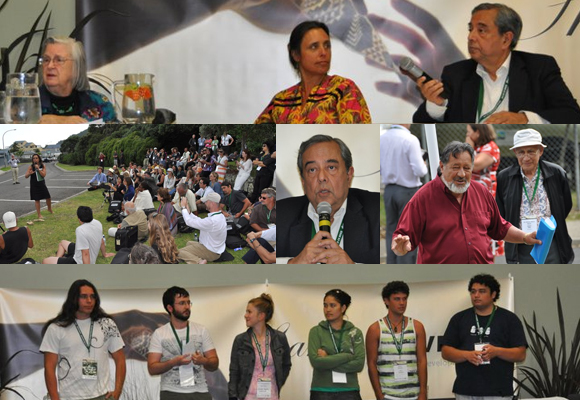
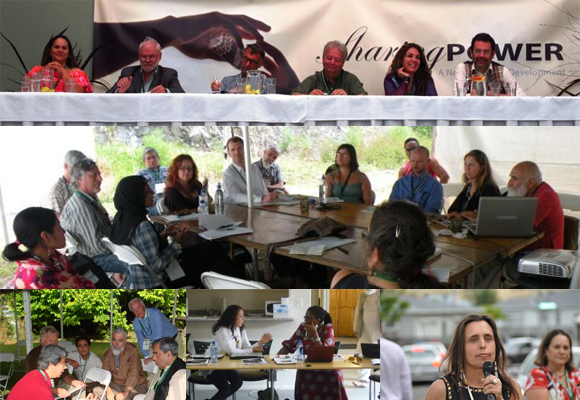
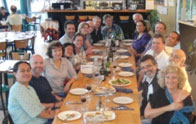 The Representatives of all CEESP Themes and Regional Vice-Chairs were present. A major focus of the SC Meeting was the process for developing the new CEESP Mandate and Programme for presentation to the IUCN World Conservation Congress. For a copy of the SC Minutes and Annexes containing Theme and Regional reports to the SC,
  The Theme on Indigenous & Local Communities, Equity and Protected Areas (TILCPEA) has initiated two new work areas - the TILCEPA Mountain Social Policy SG and the TILCEPA Marine Social Policy SG.
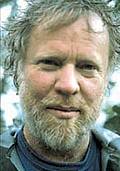 Veteran marine conservation biologist (and CEESP Member) Rick Steiner is being recognized by the 27th Alaska Legislature for his outstanding public service to the University of Alaska, and the impact of his work internationally .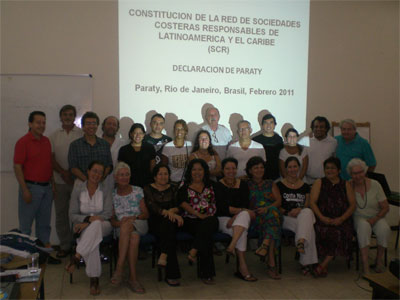
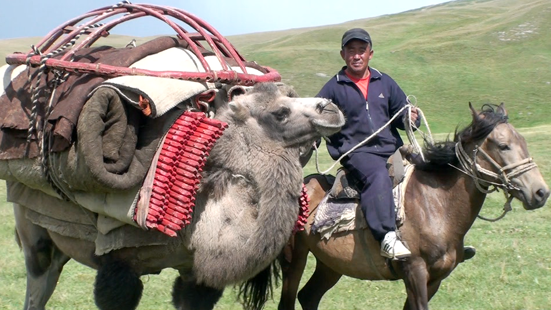 By Dario Novellino and Valentina De Marchi | Both shifting cultivation and pastoralism are essential production systems because they are a living reservoir of adaptive genes.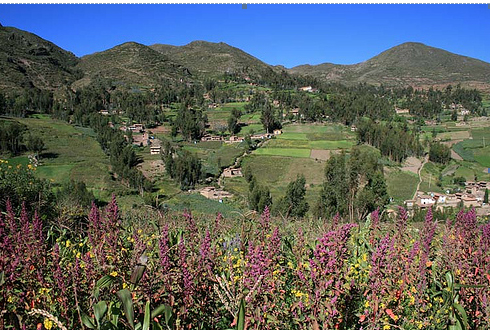
 Danone, IUCN and Ramsar have agreed to a third year of the their Wetland Carbon Partnership. The partnership aims to find and invest in large scale mangrove restoration projects which deliver CDM-certified carbon credits to Danone as well as benefits to local communities.
  By Gonzalo Oviedo, Tatjana Puschkarsky and Nigel Crawhall | Together with ICOMOS and ICCROM, IUCN is the formal Advisory Body to the UNESCO Convention on World Heritage (1972). Many of IUCN's experts from Commissions, regional offices or members support the World Heritage Programme, situated in IUCN headquarters, in its tasks to evaluate new nominations by State Parties or monitor already inscribed sites. In more and more sites, conflicts with local and indigenous communities suggest the need to consider the integration of a thorough social policy and stakeholder analysis in World Heritage processes.
  La Décima Convención de las Partes (COP-10) sobre Diversidad Biológica (CDB) se ha realizado en Nagoya, Japón en el periodo Oct. 18-29, 2010. Importantes compromisos han adquirido las 193 Partes ó Naciones que integran a la CDB, incluyendo a Honduras.
  ASOC – the Antarctic and Southern Ocean Coalition – is looking for additional signatories ‘Scientists' Consensus Statement on Protection of the Ross Sea'. Every year without the protection the intrinsic values of the Ross Sea are being eroded.
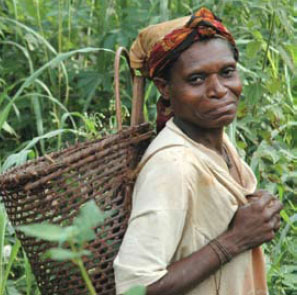 This new Forest Peoples Programme report exposes ongoing serious problems in the World Bank's forest carbon fund, which is still failing to uphold the rights of forest peoples.
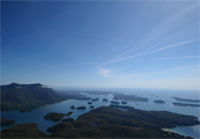 While Indigenous Community Conserved Areas (ICCAs) remain the least understood and recognized of all protected areas, they are gaining national and international recognition as important areas for the conservation of biological and cultural diversity.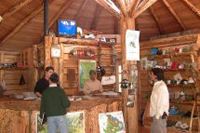
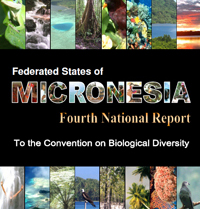 A recent report from the FSM - FSM Fourth National Report to the Convention on Biodiversity - has just been published and is available.
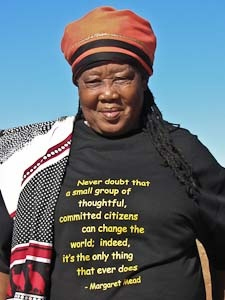 Izilwane promotes biodiversity conservation through shared knowledge and experience. The non-profit online magazine takes an anthropological approach to biodiversity loss, exploring the place of humans in the global ecosystem.
  Participants at the International Conference on Global Land Grabbing overwhelmingly found that land grabbing is occurring at a scale and speed as never before, and resulting in widespread displacement and dispossession of rural and urban communities, especially smallhold agricultural producers. Held on 6-8 April at the Institute of Development Studies (IDS), University of Sussex, the Conference was organised by the Land Deals Politics Initiative (LDPI) in collaboration with the Journal of Peasant Studies and hosted by the Future Agricultures Consortium at the IDS.
  A collection of principles for the green economy in the context of sustainable development and poverty eradication
 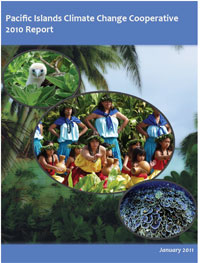 The PICCC was is part of a network of conservation cooperatives established in 2009 - 2010 and funded initially by the U.S. Department of Interior.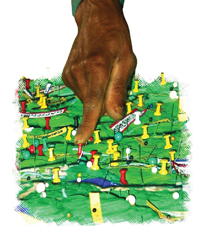
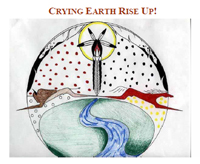 This publication is intended to provide awareness about the Lakota worldview of water, about In Situ Leach/Recovery Uranium mining and its effects, about work to challenge the corporations from continuing to mine uranium and to build new uranium mining developments.
 United Nations diplomats on Wednesday will set aside pressing issues of international peace and security to devote an entire day debating the rights of “Mother Earth.
 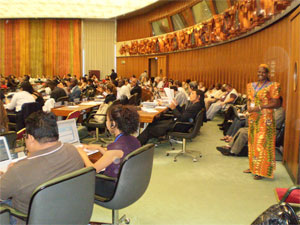 The WIPO Intergovernmental Committee on Intellectual Property and Genetic Resources, Traditional Knowledge and Folklore (IGC) has been held in Geneva, Switzerland since 2001.
  The OECD Guidelines for Multinational Enterprises should advance compliance with the United Nations Declaration on the Rights of Indigenous Peoples, the Special Rapportuer stressed at a meeting with a working group of state delegates to the Organziation for Economic Cooperation and Development (OECD) in Paris on 25 January, 2011.
  CEESP Member, Eric Gilman encourages members to consider participating in a session on fisheries bycatch as part of the World Conference on Marine Biodiversity, to be convened from 26-30 Sept. 2011





EVENT

25th International Congress for Conservation Biology being held in Auckland, NZ, 5-9 December 2011
Several CEESP members will be presenting papers at the upcoming SCB conference. The Society for Conservation Biology International Congress for Conservation Biology (ICCB) is recognized as the most important international meeting for conservation professionals and students. ICCBs are a forum for addressing conservation challenges. They are the global venue for presenting and discussing new research and developments in conservation science and practice. Most importantly, they connect our global community of conservation professionals and serve as the major networking outlet for anyone interested in conservation
» Continue Reading
IUCN Newsletters
IUCN SCC Bulletin
|
CEC Newsletter
|
CEM Newsletter
|
CEL Newsletter
|
WCPA Newsletter
|
Business & Biodiversity Newsletter
|
IUCN Science Bulletin
|
|






| "A world where cultural diversity is intertwined with biological diversity and both generate abundant livelihoods opportunities." |
Commission on Environmental, |